


HISTORY
SUPPORTIVE PERIODONTAL THERAPY (SPT)


How to use the online form
Enter the following clinical findings in the online form to determine the indicated SPT interval: probing depth in mm, furcations, oral hygiene and bleeding index.
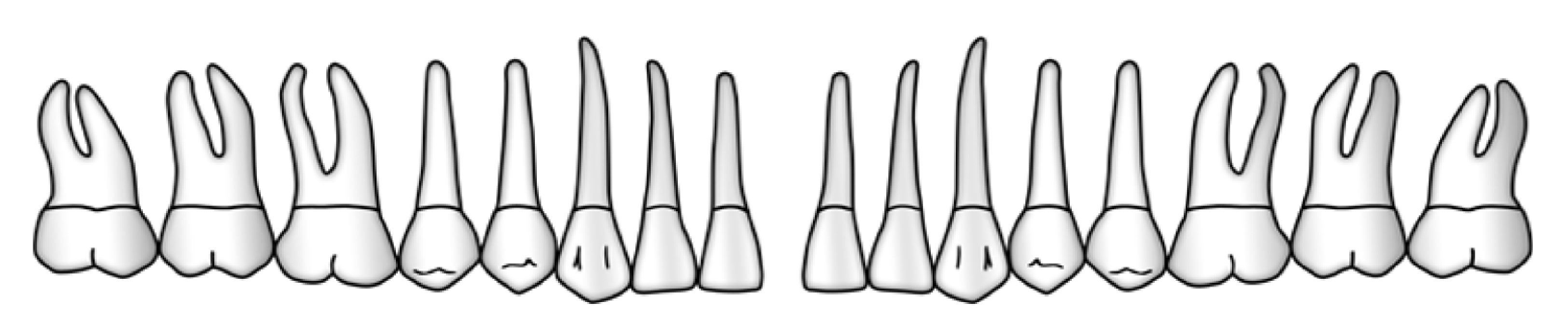
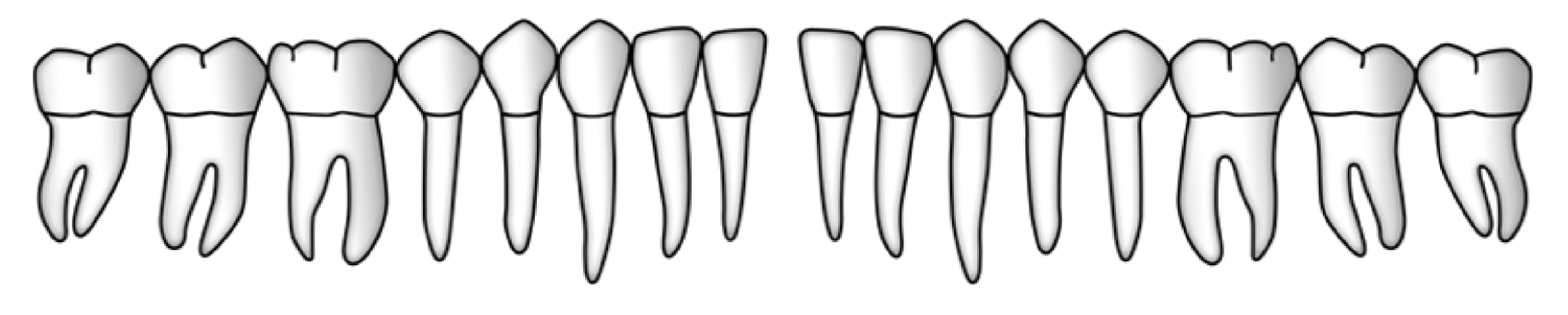
The degree of furcation involvement is indicated by using a circle. An open circle (degree 1), a semicircle (degree 2), and a filled circle (degree 3).
SPT Intervals
After clicking the "Direct" button, the data relevant for determining the SPT interval can alternatively be entered into the corresponding form. This way, the larger form above can be bypassed.
The values to be entered in the form are: number of teeth and number of sites with probing depths of 4mm, 5mm or ≥6mm. In addition, the number of sites with furcation involvement grade 2 or 3 and the percentage of sites with plaque or bleeding on probing (BOP) are recorded.
The interval suggested in the evaluation or an interval chosen by the user can be entered in the form.
Patient Information
The "remote control" on the left side allows you to access visual information for your patients. This includes illustrations of periodontal pockets, bone loss, and furcation involvements.
These information windows can be shown to the patient during the consultation to improve their understanding of the clinical situation. You can also optionally include these views in the personalized patient report.
Determining the SPT interval
The recommended SPT intervals are based on the residual pocket profiles recorded on this website. The profiles are based on the percentage of residual pockets from 4mm, 5mm and ≥6mm.
In a first step of the evaluation, a maximum interval is determined for each category of residual pockets from 4mm, from 5mm and from 6mm: The corresponding cell in the evaluation table is shaded green.
In a second step, the resulting SPT interval is determined from the category with the shortest interval: the corresponding cell in the evaluation table with the recommended interval is shaded yellow.
The algorithm used here to determine the SPT interval dates back to a retrospective study from 2019, in which the threshold values for periodontal stability were determined from existing residual pocket profiles in 883 patients and a total of 11'842 SPT sessions (Ramseier et al. 2019).
Consideration of risk factors
The recommended SPT interval should not be exceeded. If necessary, the proposed interval should be shortened if there is a correspondingly increased inflammatory (BOP) index or risk factors present.
Periodontal stability is assessed using the existing inflammation index (BOP: bleeding on probing). For non-smokers or former smokers, a value of 23% is the threshold, while for smokers this value is 16%. These thresholds are based on a retrospective review of 445 patients who had been on SPT for at least five years (Ramseier et al. 2015). A shorter interval should be selected accordingly for patients with an increased index of inflammation. In the evaluation, this is represented by an arrow labeled BOP.
Furthermore, teeth with degree 2 or 3 furcation involvement are placed in a higher risk category. This finding is based on a retrospective study of 117 patients who were followed in the SPT over an average period of 11.5 years (Salvi et al. 2014). Accordingly, a shorter interval must be selected for affected patients. In the evaluation, this is represented by an arrow labelled with the letter F.
Finally, a shortened interval is also recommended for smokers and patients with type II diabetes. In the evaluation, this is indicated with an arrow and the letters S (Smoking) or D (Diabetes).
Literature
Ramseier, C. A. (2024). Diagnostic measures for monitoring and follow-up in periodontology and implant dentistry. Periodontology 2000, 95(1), 129-155. doi:10.1111/prd.12588.
Ramseier, C. A., Nydegger, M., Walter, C., Fischer, G., Sculean, A., Lang, N. P., Salvi, G. E. (2019). Time between recall visits and residual probing depths predict long-term stability in patients enrolled in supportive periodontal therapy. Journal of Clinical Periodontology, 46(2), 218-230. doi:10.1111/jcpe.13041.
Ramseier, C. A., Mirra, D., Schutz, C., Sculean, A., Lang, N. P., Walter, C., Salvi, G. E. (2015). Bleeding on probing as it relates to smoking status in patients enrolled in supportive periodontal therapy for at least 5 years. Journal of Clinical Periodontology, 42(2), 150-159. doi:10.1111/jcpe.12344.
Salvi, G. E., Mischler, D. C., Schmidlin, K., Matuliene, G., Pjetursson, B. E., Bragger, U., & Lang, N. P. (2014). Risk factors associated with the longevity of multi-rooted teeth. Long-term outcomes after active and supportive periodontal therapy. Journal of Clinical Periodontology, 41(7), 701-707. doi:10.1111/jcpe.12266.
Copyright (C) 2026 by www.perio-tools.com